

Introduction
Picture this. A favorite RPG finally gets released in another region, but the jokes fall flat, item names sound odd, and the menu text is half cut off. The game feels off, even though the mechanics are solid. That gap between a great design and a great experience is exactly where game localization jobs come in.
Global game revenue keeps climbing, and studios now plan many big launches for multiple regions on the same day. To make that work, they need people who can bridge language, culture, and code. The U.S. Bureau of Labor Statistics projects around 20% growth for translators and interpreters over a decade, and game localization sits right inside that growing field, with research showing that Artificial intelligence, tasks, skills, and other factors are reshaping how professionals approach language work in technical domains.
We see every day on Video Game Jobs—a job board dedicated only to the games industry—how much more this work is than plain translation. It mixes cultural judgment, technical knowledge, text and audio work, and a real love for games. Whether someone wants to translate Japanese visual novels, run a localization QA team, or manage projects for a AAA studio, there is space for focused professionals who care about player experience.
“The difference between the right word and the almost right word is the difference between lightning and a lightning bug.” — Mark Twain
That quote sums up why good localization matters so much. In games, the “right word” often decides whether a scene feels emotional or flat.
In this guide, we walk through what game localization actually is, the main roles in the field, the skills that matter most, and how to build a portfolio that gets noticed. We also look at the U.S. job market, salary ranges, and a step‑by‑step application strategy. By the end, it becomes much clearer how to move from interest to real game localization jobs, and how Video Game Jobs can help along the way.
Key Takeaways
- Game localization careers cover many paths, from translator and QA tester to project manager and director. Each path taps different mixes of language, technical, and leadership skills, which means people with many backgrounds can find a fit. When we talk about game localization jobs, that includes in‑house, agency, and freelance roles across this whole spectrum. Knowing these paths helps focus learning and applications.
- Success rests on a blend of language, culture, and tools. Strong English plus another language is only the start; studios also value experience with CAT tools, game engines, and cross‑team communication. A clear passion for games, backed by examples of thoughtful localization choices, sets candidates apart for high‑quality game localization jobs.
- There are several valid entry routes, including internships, QA testing, junior translator roles, and freelance work. The U.S. market offers a mix of on‑site, hybrid, and remote positions, with salaries that can rise from around $40,000 for new starters to well into six figures for directors. Video Game Jobs narrows the search by listing only game industry roles, so people spend less time sifting through noise and more time applying to relevant game localization jobs.
What Is Game Localization And Why It Matters
Game localization is the full process of adapting a title for a specific region, not just switching words from one language to another. It touches on:
- In‑game text and dialogue
- UI and menus
- Subtitles and captions
- Voice acting scripts and recorded lines
- Store pages and marketing copy
- Sometimes visuals, symbols, or in‑game events
The goal is that players in another country feel like the game was made for them from the start.
This matters because global launches are now standard for large studios. Companies such as Nintendo, Electronic Arts, and Ubisoft invest heavily so they can release in many markets at once without losing quality. When localization is handled well, it boosts reviews, player retention, and long‑term revenue. When it is rushed, it can damage a brand and cut into sales.
“Localization is more than translation; it’s culturalization.” — Kate Edwards, game industry consultant
The work also involves creative and technical challenges, and academic research on Gamification in Theory demonstrates how understanding player engagement principles influences localization decisions across different cultural contexts. People in game localization jobs must balance word length with UI limits, adjust jokes and references, and work inside build tools and version control. That mix makes the field demanding, but also very satisfying for those who enjoy both language and games. Since high‑quality localization directly affects business results, studios keep hiring skilled specialists, which is good news for anyone entering this career.
Core Game Localization Roles And Career Paths

Game localization covers a wide range of roles that blend language, writing, testing, and technology. Some jobs are very focused, like pure translation, while others center on project planning or team leadership. When we look at game localization jobs on Video Game Jobs, we see openings across all of these areas at once.
Understanding what each role actually does helps match personal strengths to the right path. It also makes it easier to target applications, build the right portfolio pieces, and talk clearly about goals with recruiters and hiring managers.
Localization Translator/Linguist
Localization translators handle the actual words that players read. They adapt:
- Dialogue and character banter
- Menu text and UI labels
- Item names and skill descriptions
- Tutorials, hints, and tips
- Subtitles and captions
- Store descriptions and marketing lines
Instead of translating line by line, they keep the tone, humor, and emotional weight from the source.
Many game localization jobs for translators focus on specific language pairs such as Chinese to English, Japanese to English, Spanish, or Brazilian Portuguese. For these roles, native‑level skill in the target language is expected, along with strong reading skill in the source language. A love for games helps a lot, because translators often need to understand mechanics and story arcs to make the right choices.
Localization Editor
Editors act as the last line of defense for style and clarity. They take translated text and polish it so it reads smoothly, matches the game’s voice, and stays consistent with glossaries and style guides. They look out for grammar issues, awkward phrasing, and terms that change from one part of the game to another.
In practice, editors work closely with translators to resolve tricky lines, jokes, or lore notes. At big studios such as Nintendo, language‑specific editors focus on one target market, which lets them build a strong sense of what feels right to local players. Many editor‑level game localization jobs ask for several years of translation experience plus strong writing skill.
Localization Project Manager

Project managers pull all the pieces together. They plan schedules, set budgets, track progress, and connect developers, translators, editors, QA testers, and outside vendors. A single project manager might handle many languages for one large title or several smaller projects at once.
Common responsibilities include:
- Setting timelines for each localization phase
- Assigning work to internal staff and vendors
- Tracking file status and approvals
- Coordinating voice‑over recording and implementation
- Reporting progress and risks to producers
These roles carry a lot of responsibility because delays or miscommunication can affect release dates. Job titles can vary, such as Localization Manager, Localization Producer, or Voiceover and Localization Producer, but the core work stays similar. People in these game localization jobs rely on strong organization, problem solving, and the ability to explain needs clearly to both creative and technical teams.
Localization QA Tester
Localization QA testers play localized builds and look for anything that breaks the player experience. That includes:
- Spelling mistakes and grammar errors
- Mistranslated or confusing lines
- Unlocalized strings and mixed languages
- Text that runs out of UI boxes or overlaps
- Mismatches between text and what happens on screen
- Cultural issues that might feel odd or offensive
This role is one of the most common entry points for game localization jobs. It gives real exposure to game builds, bug tracking tools, and project pipelines. With solid performance, testers can move into senior QA, coordination, or even translation and editing, especially if they continue building language skills on the side.
Localization Engineer
Localization engineers handle the technical side of getting text and other assets in and out of the game. They set up pipelines to extract strings, hand off files to translators, re‑import localized text, and check for encoding or display issues. They often manage CAT tool integrations, scripts, and build processes.
To do this well, engineers need programming knowledge and comfort with game engines such as Unreal Engine or Unity. Some engineer‑level game localization jobs also ask for database or scripting experience so the engineer can adjust tools as needs change. These roles suit people who enjoy both code and language challenges and like building systems that keep projects running smoothly.
Specialized Roles
Beyond these core paths, there are many specialized roles that mix localization with other skills. Examples include:
- Voice‑over production specialists
- Audio editors who cut and sync localized dialogue
- Localization team leads who manage groups of translators or editors
- Localization designers who work on narrative and UX with a language focus
These positions often grow from experience in one of the base roles and open new directions for long‑term careers in game localization.
Essential Skills For Game Localization Success
No matter which role someone chooses, studios expect a base set of skills from candidates for game localization jobs. These skills fall into three groups:
- Language and culture
- Technical and tool knowledge
- Soft skills and professional habits
Balancing these areas makes it easier to adapt to new tools, game genres, and team structures. It also gives hiring managers more confidence that a person can handle the full life cycle of a project, not just one narrow task.
Language Proficiency And Cultural Knowledge
Strong language skill is the foundation for every localization role. For most game localization jobs, that means native or near‑native fluency in the target language and a high level of control over the source language. Candidates must be comfortable with grammar, idioms, slang, and regional differences, not just textbook rules.
Cultural understanding matters just as much as grammar. Games are full of humor, pop culture nods, and social references that do not always carry over as is. When we localize, we often need to swap or adjust those so players in the target region feel the same emotion as players of the original version. This kind of judgment comes from long exposure to both cultures through games, films, books, and daily life.
Being able to explain choices is also valuable. When a translator or editor can walk a lead through why a joke changed or a reference moved, it builds trust and raises their value inside the team.
Technical And Tool Proficiency
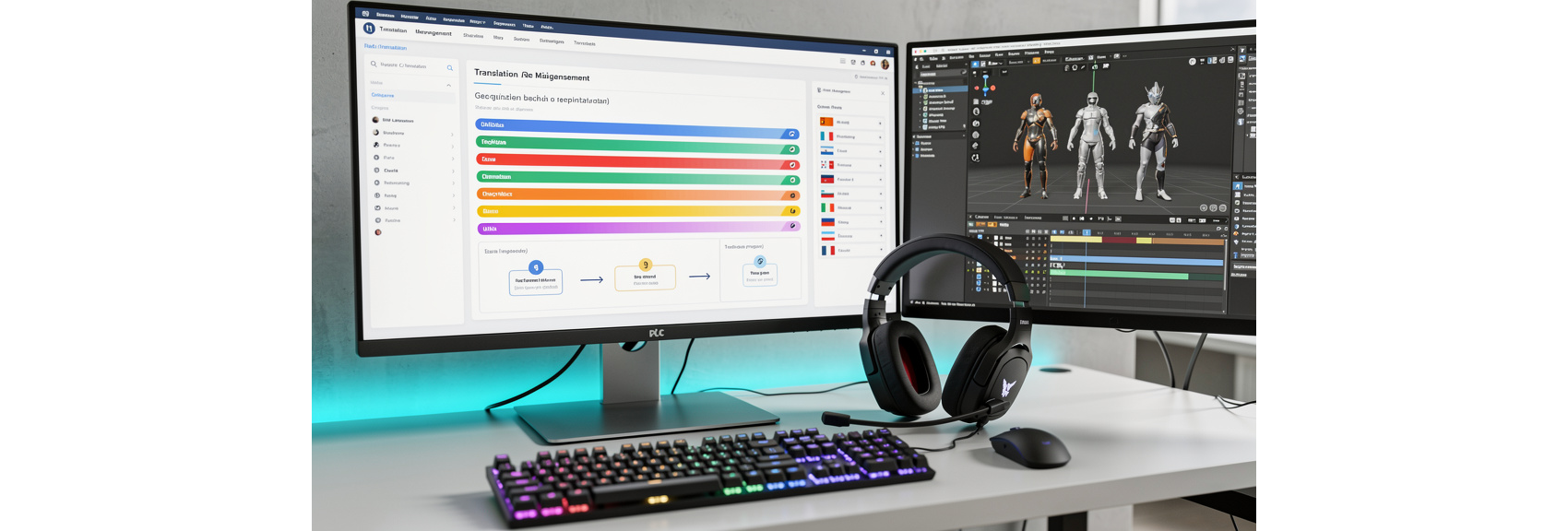
Modern localization pipelines rely on tools. CAT tools such as SDL Trados Studio, memoQ, or XTM help keep terminology consistent and speed up repeated strings, and Translation Management Systems track files through each stage of a project. Many game localization jobs list at least one of these in their requirements.
Even non‑engineering roles benefit from a basic sense of how games are built, such as:
- What a string ID is and why it matters
- How branching dialogue and choice systems work
- Why UI space is tight on console and mobile
- How build versions move from dev to QA to release
For localization engineers, programming skill and comfort with engines like Unreal Engine or Unity are standard, and studies examining How Generation Z Must approach technical skills reveal evolving expectations for professionals entering game development and localization fields. The more fluent we are with these tools and concepts, the easier it becomes to work smoothly with developers and avoid errors that could slip into a live build.
Soft Skills And Professional Attributes
Localization is team work almost by definition. Translators, editors, QA testers, producers, and engineers all touch the same content at different points. Good communication helps keep that process simple, especially under time pressure near a release.
Key soft skills for game localization jobs include:
- Attention to detail: catching typos, missing honorifics, or wrong numbers in quest steps
- Clear communication: asking questions early and documenting decisions
- Time management: handling sprints, patches, and sudden scope changes
- Collaboration: working with people across time zones and disciplines
- Genuine interest in games: understanding player expectations and genre conventions
People who combine these traits with strong language skills build a profile that hiring managers remember.
Building Your Path: Education, Experience, And Portfolio
There is no single “right” way to reach game localization jobs, which is good news for people coming from many backgrounds. Some candidates follow a formal academic route, others come from game QA or community roles, and others start as freelance translators and move into games later.
What matters most is proof of skill. Degrees, certificates, work samples, and references all act as signals. By planning education, early experience, and a focused portfolio together, it becomes easier to stand out on platforms like Video Game Jobs.
Educational Background And Certifications
Many people in game localization hold degrees in Translation, Linguistics, Foreign Languages, or Cultural Studies. These programs teach translation theory, text analysis, and cross‑cultural communication, which all apply directly to this field. For those who enjoy academic work, a degree can be a strong base.
However, a degree is not the only path. Professional certificates in translation or specific tools such as SDL Trados or memoQ help show commitment and practical skill. Short online courses about game localization or game writing can also fill gaps and keep knowledge fresh. When we see game localization jobs on our platform, we notice that employers care just as much about proof of skill as they do about a formal diploma.
Gaining Practical Experience
Real projects are where theory meets practice. Good ways to collect that experience include:
- Internships at game studios or localization agencies
- Entry‑level roles such as Localization QA Tester, Junior Translator, or Production Assistant
- Freelance work for smaller studios or agencies
- Volunteer projects, like fan translations or mods
Internships are a strong first step because they expose people to pipelines, tools, and real deadlines. Even a few months of this kind of work can turn into strong references and contacts.
Volunteer projects still count. Fan translation groups, mods for well‑known games, or localizations for small indie titles can all go into a portfolio. Each experience, paid or unpaid, acts as proof of interest and skill for future game localization jobs.
Building A Compelling Portfolio
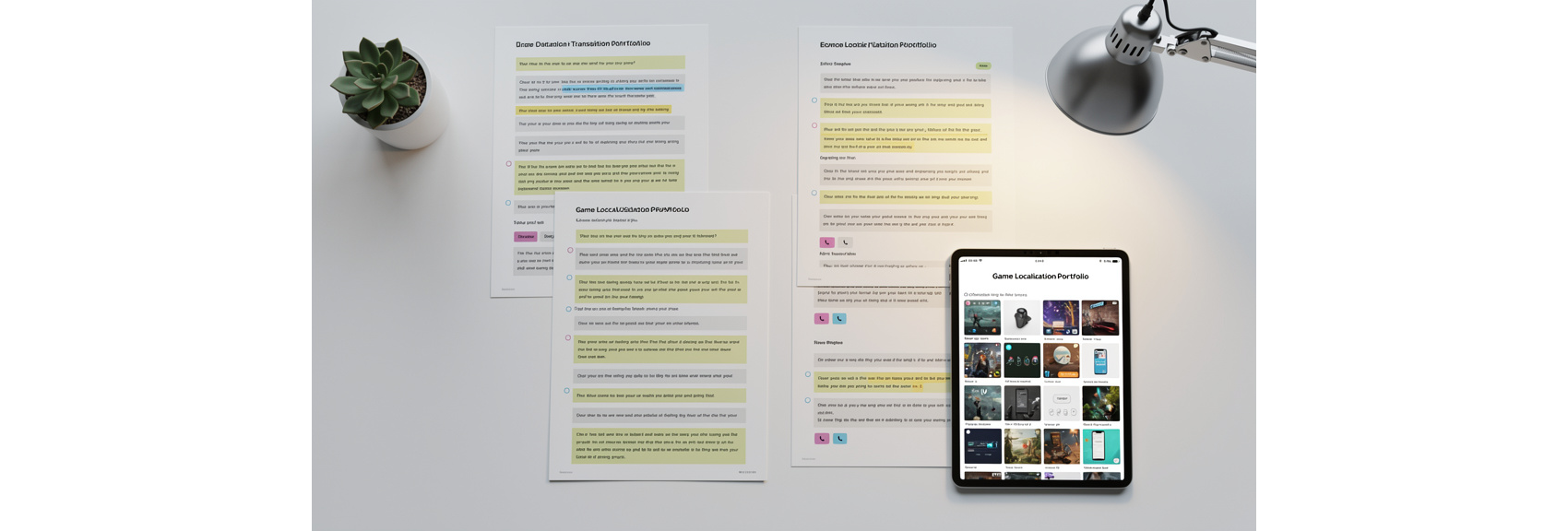
A good portfolio shows, rather than just tells, what someone can do. For localization, that means clear samples of:
- In‑game dialogue and barks
- UI strings and system messages
- Tooltips and item descriptions
- Short marketing blurbs or store pages
When possible, include a short note under each sample that explains any interesting choices or tricky parts. Before‑and‑after examples help a lot. Showing the source text next to the localized version lets hiring managers see how a person handles tone, humor, and tight space limits.
A simple personal website or a well‑organized PDF both work. On Video Game Jobs, candidates can point to this portfolio right in their profiles and applications so recruiters for game localization jobs can quickly judge fit.
Navigating The U.S. Game Localization Job Market
The U.S. market for game localization jobs spans big publishers, mid‑sized studios, specialist agencies, and fully remote freelance work. Some roles focus on one franchise for years, while others switch from project to project every few months. This variety gives room for many work styles and career goals.
Understanding who hires, where jobs cluster, and how pay shifts with experience helps set clear expectations. It also explains why a specialized platform like Video Game Jobs saves time compared with general job boards.
Who's Hiring: Studios, Agencies, And Freelance Opportunities
Major game studios and publishers often keep in‑house localization teams. Names like Nintendo, Sega of America, Electronic Arts, Activision Blizzard, Tencent, and Netflix appear often in game localization jobs. Working in‑house tends to bring stable pay, benefits, and deep involvement with a company’s brands.
Specialist localization agencies form the second big group of employers. Companies such as Keywords Studios, Lionbridge, and Altagram run projects for many different clients at once. Jobs here expose staff to a wide mix of genres and platforms, from console and PC to mobile and VR.
The third path is freelance work. Many translators, editors, and QA testers build careers as independent contractors, taking projects from studios and agencies when work is available. On Video Game Jobs we list openings from all three groups, so people can compare in‑house, agency, and freelance game localization jobs in one place.
Geographic Hubs And Work Arrangements
While remote work is common, certain cities stand out as hubs for game and localization work. Irvine, Los Angeles, and Santa Monica in California, Redmond and Bellevue in Washington, and Charleston in South Carolina host many studios and vendors. Living near these hubs can help for on‑site or hybrid roles, as well as for local meetups and events.
That said, many employers now offer flexible arrangements:
- Roughly four out of ten roles are fully remote
- A similar share are traditional on‑site positions
- The rest follow a hybrid pattern
Remote‑friendly game localization jobs let skilled people contribute from almost anywhere in the country. On Video Game Jobs, filters make it simple to view only remote, hybrid, or on‑site roles, so candidates can match openings to their preferred style of work.
Experience Levels And Salary Expectations
Compensation in game localization tracks closely with experience and responsibility. Entry‑level roles such as QA tester or junior translator often start around $40,000 a year, sometimes a bit higher in expensive cities. These roles focus more on learning and gaining exposure than on high pay.
Mid‑level specialists, including experienced translators, editors, and project coordinators, often earn between $60,000 and $80,000 or more. Senior leads, managers, and engineers can move into six‑figure ranges, especially in high‑cost regions or at major publishers. Director‑level game localization jobs, which shape strategy for a studio or product line, can reach $120,000 and above.
On Video Game Jobs, we encourage employers to share salary bands so candidates have a clear sense of where a role sits. This helps people decide which openings match their goals and where they might be ready to take the next step.
How To Land Your Game Localization Job: Application Strategy
Once someone has skills and a basic portfolio, the next step is turning that into offers for game localization jobs. A focused application plan saves time and raises the odds that the right recruiters notice.
A simple approach looks like this:
- Set up your base on Video Game Jobs.
- Create a detailed profile, upload your resume, link your portfolio, and set job alerts for your target roles and language pairs.
- Target specialized platforms first.
- Starting with Video Game Jobs means every posting is in the games industry, and many are directly tied to localization. That cuts down on noise from unrelated roles.
- Adapt your resume and cover letter for each role.
- Highlight the language pair, CAT tools, and game genres that match the posting. Mention specific titles you know in that genre and say a few words about why localization matters for those experiences.
- Show your technical side.
- List CAT tools, TMS platforms, bug tracking tools, and any game engine knowledge so hiring managers see that you can plug into existing pipelines without long ramp‑up.
- Network with intent.
- Industry events such as GDC or LocWorld, plus online groups on LinkedIn and Discord, provide chances to meet people who hire for game localization jobs. Short, polite follow‑ups after meeting someone go a long way.
Many studios and agencies use tests as part of their process. Practicing short translations of game dialogue, UI strings, and item text within a set time builds confidence for these steps. After applying through Video Game Jobs, following up politely, updating the profile, and keeping the portfolio current all help stay on the radar of hiring managers.
Conclusion
Game localization sits at the intersection of language, culture, and interactive storytelling, and demand for these skills keeps rising. With translation and interpretation roles growing fast across the economy, it makes sense that game localization jobs also keep expanding as more titles aim for worldwide launches.
There is space here for many types of professionals, from students taking their first internship to senior producers ready to lead teams. Strong language skills, cultural awareness, comfort with tools, and a clear love for games combine into a powerful profile that many studios want on their teams. The field offers both steady full‑time roles and flexible contract work, including a growing number of remote options.
Most of all, this work matters. When we support good localization, we help players around the world enjoy stories, characters, and worlds they might never have touched otherwise. To move from interest to action, the next step is simple: create a profile on Video Game Jobs, explore current game localization jobs, and start applying. The projects that need a voice in your language are already in development right now.
FAQs
Do I Need A Degree In Translation To Work In Game Localization? (Question)
A degree in Translation, Linguistics, or Foreign Languages can be a strong asset, but it is not a hard requirement for all game localization jobs. Many employers care more about real language skill, cultural insight, and proof that a candidate can handle game content well. Certificates, online courses, and tool training can help fill in gaps if a formal degree is not present. A strong portfolio and solid references often speak just as loudly as a diploma.
What Are The Most In‑Demand Languages For Game Localization In The U.S.? (Question)
Right now, many postings on Video Game Jobs ask for Chinese to English, Japanese to English, Spanish, and Brazilian Portuguese. European languages such as French, German, and Italian also appear often in game localization jobs. As new regions grow, demand for Korean, Arabic, and Southeast Asian languages continues to rise. Keeping an eye on current listings is the best way to see which language pairs are hot.
Can I Work Remotely As A Game Localization Professional? (Question)
Yes, remote work is common in this field. A large portion of game localization jobs in the U.S. are fully remote, and many others follow a hybrid pattern that mixes home and office work. Freelance translators, editors, and QA testers in particular often work from home for clients across several time zones. On Video Game Jobs, remote roles are clearly labeled so people can focus on openings that match their needs.
How Long Does It Take To Break Into The Game Localization Industry? (Question)
The time it takes depends on starting skills and how focused a person is with applications. Someone who already has strong language ability and some translation practice might move into an entry‑level QA or junior translator role within three to six months of steady effort. Others may spend six to twelve months building a freelance or volunteer portfolio while applying for game localization jobs. People who come from another translation field often move faster, since they already know CAT tools and client work. Using a specialized platform like Video Game Jobs speeds this process because it connects candidates directly with employers who understand localization and are actively hiring.