
Introduction
Ask five studios what a game producer is and you will hear five different answers. Some picture a spreadsheet wizard. Others imagine a mini–creative director. Many only know that when the producer is missing, meetings go sideways and milestones slip.
The role first took shape when Trip Hawkins launched Electronic Arts in 1982 and borrowed ideas from record producers. As budgets grew and live games became standard, production grew into a well‑paid discipline; experienced producers in the United States often earn well above $125,000 per year.
So, what is a game producer in practice? Think of the producer as the glue holding people, scope, time, and money together. In this guide, we at Video Game Jobs break down day‑to‑day work, core skills, career paths, pay ranges, and how to move into production—whether you are planning your career or hiring for your studio.
Key Takeaways
- A game producer blends project manager, team coach, and product owner. They keep the game on time, on budget, and aligned with the vision from first pitch through launch and live updates.
- Core responsibilities span planning, scope control, risk management, and communication. Producers connect design, engineering, art, QA, marketing, and external partners so everyone works toward the same goals.
- Strong producers combine project management skills, clear communication, calm leadership, and solid industry knowledge. Many move into production from QA, support, community, or project roles in other industries.
- There is a common production ladder: QA or assistant roles → associate producer → producer → senior producer → executive producer. Pay in the U.S. often ranges from about $55,000 at entry level to well over $125,000 for senior and executive roles.
Understanding The Game Producer Role
A game producer owns the full project view. They do not design levels or write engine code, but they are accountable for how all that work fits together against scope, schedule, and quality targets. Their job is to make sure the people who do create the game can do their best work.
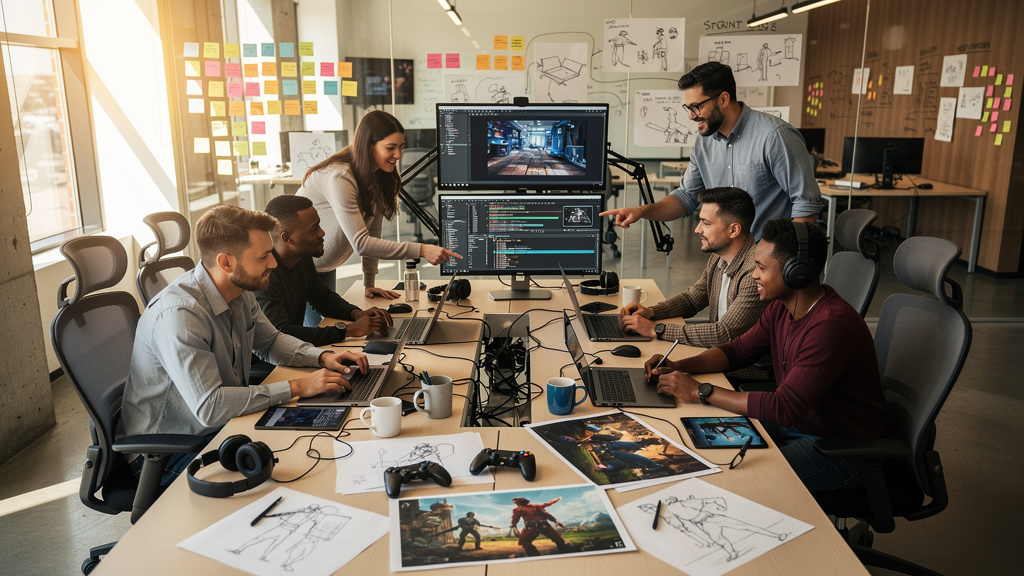
On a healthy team, the producer is the link between creative, technical, and business voices. They listen to leadership, designers, engineers, artists, QA, and marketing, then turn those viewpoints into a shared plan. When priorities clash, they help people agree on what matters most and keep the vision clear.
Producers are not replacement designers, programmers, or art directors. Instead, they track how decisions in each area affect time and budget, flag risks early, and push for adjustments before problems explode. In a three‑person indie team this may mean very hands‑on coordination; in a large AAA studio it often means guiding leads and reporting to directors or publishers.
The Evolution Of The Producer Role In Gaming
Early arcade and home computer games were often built by one person or a tiny group, so there was little need for a dedicated producer. As teams and budgets grew, that model broke down.
Trip Hawkins introduced the producer title at Electronic Arts, inspired by record producers who managed artists, schedules, and contracts. Around the same time, Sierra On‑Line began crediting producers on game boxes. At first, some executives and press doubted the need for the role, seeing it as “too Hollywood.”
As projects grew to dozens or hundreds of specialists, it became clear that someone had to coordinate creative work, technology, and money. Production moved from experiment to standard practice. Today, nearly every serious studio has producers, though the exact mix of project management, product thinking, and people leadership still varies by company and team size.
Core Responsibilities Of A Game Producer

From pitch to post‑launch, producers are responsible for scope, schedule, quality, and team health. Their focus shifts by phase, but the through‑line is planning ahead, spotting risks early, and keeping communication clear.
Pre-Production And Concept Development
In pre‑production, producers help turn early ideas into a funded plan:
- Work with creative leads to frame the core concept, audience, platforms, and business model.
- Organize workshops that define mechanics, visual tone, and technical risks.
- Compare ideas against the market to see where the game could stand out.
- Set up early playtests or surveys so player feedback arrives before big commitments.
By the end of this phase, a producer aims to have a high‑level scope, first budget, and rough schedule that leadership or publishers can approve.
Active Development And Project Management
Once full production starts, the producer’s day revolves around project management:
- Build and maintain schedules with milestones for prototypes, content drops, alpha, beta, and release.
- Track work in tools such as JIRA, Trello, or Asana so every task has an owner and a deadline.
- Run stand‑ups and check‑ins to catch blocked work and slipping features early.
- Watch staffing, outsourcing, and license costs against the agreed budget.
- Lead scope discussions when it becomes clear that time, money, and features no longer line up.
“A delayed game is eventually good, but a rushed game is forever bad.” — Shigeru Miyamoto
Great producers keep this balance in mind and help teams choose between cutting, changing, or delaying features rather than shipping something that misses the quality bar.
Quality Assurance And Launch Preparation
As the game approaches alpha and beta, the producer’s focus tilts toward stability and shipping:
- Work with QA leads on test plans, bug triage rules, and release criteria.
- Coordinate betas or focus tests to collect feedback on difficulty, usability, and performance.
- Organize localization and voice work, plus regional adjustments where needed.
- Sync with marketing on trailers, store pages, screenshots, and key messages.
- Handle console or mobile submissions and certification with platform partners.
Right before and after launch, producers manage day‑one patches, hotfix priorities, and early player data. They are often the person who has all the moving parts of release in mind and keeps everyone calm when pressure peaks.
Essential Skills Every Game Producer Needs
Titled tasks are only half the story. The other half is the skill set that lets a producer guide a team without burning it out. Most of these skills can be learned over time and often transfer from other industries.
Project Management And Organizational Skills
At the core of production is clear, realistic planning. Producers:
- Break goals into tasks and milestones.
- Choose and adapt methods like Scrum, Kanban, or Waterfall.
- Use tools such as JIRA, Asana, or Microsoft Project to keep work visible.
- Track progress and adjust plans as reality changes.
Formal training—PRINCE2, PMP, or Scrum Master—helps, but the real test is whether you can shepherd a project from concept through release without losing sight of priorities.
Communication And Interpersonal Excellence

Most of a producer’s work is communication. They translate:
- Technical detail into plain language for executives.
- Business goals into concrete targets for developers.
Good producers listen carefully, ask clarifying questions, and build trust so people share bad news early. When design wants conflict with technical limits, they guide calm, practical discussions rather than letting arguments spiral.
Leadership And Vision
Producers lead through influence more than authority. They:
- Keep the team focused on why the game matters and who it is for.
- Hold the line on priorities when stress rises.
- Make trade‑off calls—cutting features, moving dates, or adjusting budgets—when no option feels perfect.
- Take responsibility for hard messages to leadership or publishers so discipline leads can focus on their teams.
A strong producer protects the team from chaos by giving clear direction and owning tough decisions.
Industry Knowledge And Business Acumen
Modern producers need a working grasp of the business side of games:
- How PC, console, mobile, and VR differ.
- Store rules and approval processes.
- Models such as premium pricing, free to play, subscriptions, and live service.
They follow market trends, comparable titles, and player behavior, then share that context with the team. They also pay attention to budgets, contracts, and return on investment so the studio avoids costly surprises.
Types Of Game Producer Roles
The title “producer” hides several different jobs. The structure of the company and who signs your paycheck shape what the role looks like day to day.
Internal Vs. External Producers
Internal producers:
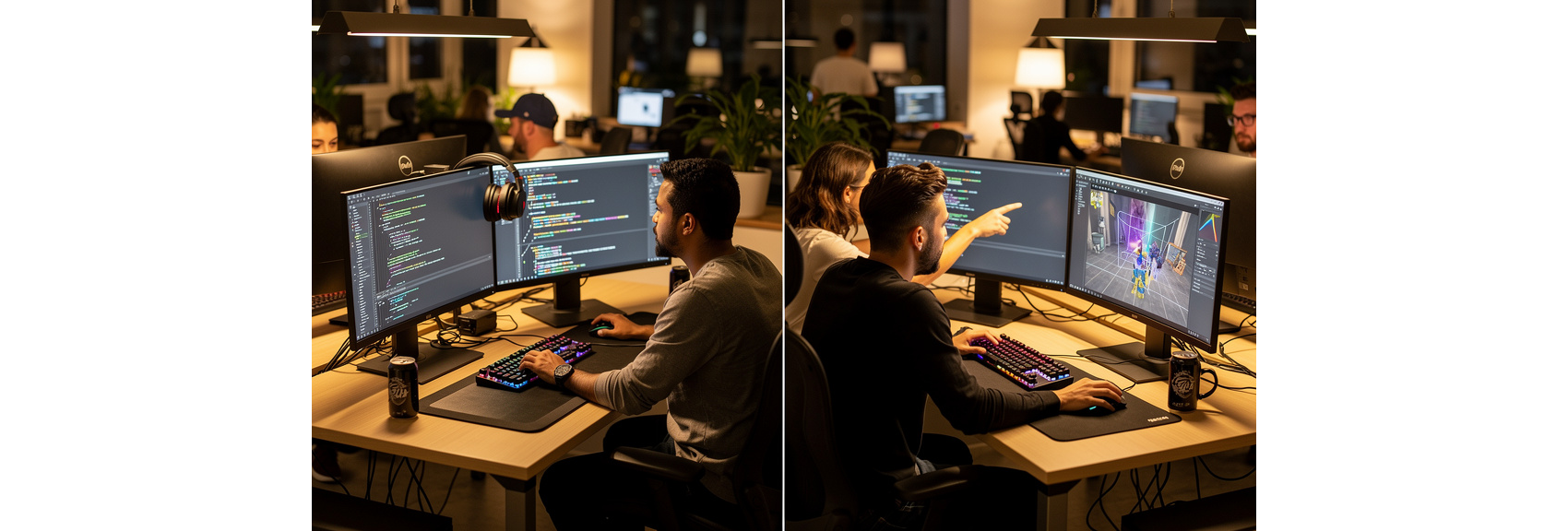
- Work inside a development studio.
- Focus on one project or a small group of projects.
- Spend their days with design, engineering, art, and QA leads.
- Care most about how to ship with the team they directly support.
External producers:
- Work for publishers and oversee several games, often at different studios.
- Track milestone deliveries against contracts.
- Report status and risks to publishing leadership.
- Balance studio needs with portfolio and business goals.
At Video Game Jobs, we see openings for both paths, and many producers move between them over the course of a career.
The Production Career Ladder

Production has a clear progression:
- Assistant / Associate Producer – Tracks assets, takes notes, manages small features, or supports one department. Great role for learning pipelines.
- Producer – Owns schedule and budget for a project or major slice of one. Main point of contact for department leads and, often, the publisher.
- Senior Producer – Oversees multiple projects or a key franchise, mentors junior producers, and contributes to longer‑term planning.
- Executive Producer – Guides portfolios, greenlights projects, and focuses on strategy more than daily task tracking.
- Line Producer (mainly on very large games) – Specializes in detailed time and cost control.
Listings on Video Game Jobs usually call out these levels so candidates can align roles with their experience.
Collaboration Who Game Producers Work With
Another way to answer what is a game producer is to look at who they talk to all day. Producers sit in the center of a web of relationships, and their success depends on how well those relationships work.
Internal Development Teams
Inside a studio, producers:
- Meet regularly with the lead programmer, art director, game designer, and QA lead.
- Gather updates, risks, and staffing needs.
- Help departments understand how their choices affect others.
On smaller teams, they also speak often with individual artists, programmers, designers, and testers. Close contact with build engineers is vital, because broken builds can stall everyone. A producer who keeps these groups aligned prevents costly surprises.
Publishers And Upper Management
Producers are the main interface between the team and leadership. They:
- Send milestone reports, build notes, and risk summaries.
- Present options when the project needs more time, money, or scope changes.
- Push back on late feature requests that would derail the schedule.
Good reporting makes it easier to protect the team while still meeting business targets.
External Partners And Support Teams
Most games ship with help from outside groups. Producers coordinate:
- Marketing teams on trailers, PR beats, and social content.
- Localization staff on text, VO, and cultural adjustments.
- Outsourcing partners for art, audio, or tools.
- Platform partners (Sony, Microsoft, Nintendo, Apple, Google) on submissions and certification.
- Community and player support teams on patch timing and feature messaging.
The producer keeps these groups informed so players hear accurate, timely updates.
How To Become A Game Producer Career Pathways
There is no single doorway into production, but most producers blend some education, hands‑on project work, and networking. At Video Game Jobs, we see people arrive from QA, design, engineering, community, and non‑game project roles.
Educational Background And Qualifications
A degree is not mandatory everywhere, but common backgrounds include:
- Game design or digital media – Helps you understand systems, content pipelines, and creative workflows.
- Computer science – Gives you enough technical grounding to talk with engineers and estimate risk.
- Business or management – Supports budgeting, planning, and strategy.
Useful classes often include communication, statistics, accounting, and project management. Certifications such as PRINCE2, PMP, or Scrum Master signal that you take planning seriously, though your track record will matter more than certificates alone.
Building Industry Experience
Real projects matter the most. Common paths:
- Start in QA, grow into lead roles, then move into associate producer positions.
- Join as an assistant or associate producer right away if you have strong internship or side‑project experience.
- Build and ship small games in Unity, Unreal Engine, or Godot so you understand the full pipeline.
- Move in from other industries where you managed teams and deadlines, and show how those skills transfer.
On Video Game Jobs, many early‑career production roles are tagged so candidates can spot them quickly.
Networking And Professional Development
Relationships and learning move careers forward. Producers often:
- Attend events like GDC, PAX Dev, and local IGDA meetups.
- Join online communities (Discord servers, forums, LinkedIn groups) focused on production.
- Take short courses on Agile for games or specific tools.
- Share postmortems or blog posts about what went right and wrong on projects.
As one senior producer told us, “Your next job often comes from someone who has already seen how you handle chaos.”
Building a visible, helpful presence makes it easier for studios to trust you with production work.
Salary And Compensation Expectations
Producers usually sit near the top of the pay range for non‑executive roles because they carry direct responsibility for budget, schedule, and project success.
Salary Ranges By Experience Level
Numbers vary by region and studio size, but rough U.S. figures look like this:
- Entry‑level / Associate Producers (0–3 years): around $55,000–$70,000.
- Mid‑level Producers (3–6 years, 1–2 shipped titles): roughly $75,000–$95,000.
- Senior / Executive Producers (6+ years, multiple shipped projects): from about $125,000 upward, with large publishers sometimes offering $150,000–$200,000+.
Major hubs such as San Francisco, Los Angeles, Seattle, and Austin usually pay more, but living costs are higher as well. Listings on Video Game Jobs often include ranges so expectations stay aligned.
Benefits Beyond Base Salary
Compensation for producers typically also includes:
- Health insurance (medical, dental, vision) and retirement plans such as 401(k) matches.
- Paid time off, holidays, and sometimes extra rest after intense periods.
- Flexible hours and, increasingly, remote or hybrid options.
- Conference, training, and software budgets.
- Copies of studio games, discounts, and relocation assistance for senior hires.
When comparing offers, it helps to look at the whole package, not just the base salary.
Conclusion
Strip away the mystique and what is a game producer becomes clear: this is the person who guides a game from pitch through post‑launch while balancing time, money, scope, and quality. They lead not by doing every task themselves, but by coordinating people, plans, and communication.
Production mixes project management, leadership, and industry insight. Many producers spend a few years in QA, assistant roles, or related jobs before they own a full project, and pay grows significantly as responsibility increases.
As games lean harder on live service models, distributed teams, and rapid updates, strong producers are more valuable than ever. At Video Game Jobs, we focus on helping studios find these people—and helping aspiring producers find the roles that match their skills and ambitions.
FAQs
Do I Need To Know How To Code To Become A Game Producer?
Deep coding skills are not required for most producer roles. The job centers on planning, people, and product direction, not writing features. That said, basic knowledge of how engines, version control, and build systems fit together makes conversations with engineers easier and improves your judgment about risk and estimates.
What Is The Difference Between A Game Producer And A Game Designer?
Designers focus on what the game is and how it plays: mechanics, levels, systems, and player experience. Producers focus on how the game gets made: schedules, budgets, staffing, and risks. In short, designers draw the map, and producers organize the trip. On small teams one person may cover parts of both, but the skills remain distinct.
How Long Does It Take To Become A Game Producer?
Many people need around three years of industry experience before landing a full producer title. A common path is one to two years in QA or assistant roles, then a couple of years as an associate producer, helping ship at least one project. Senior producer roles often expect five to seven years; executive producer roles usually expect more.
What Is The Most Challenging Aspect Of Being A Game Producer?
The hardest part is balancing scope, schedule, and budget while keeping the team healthy. Producers sit between the desire for more features, pressure for earlier dates, and finite money. They have to make tough calls—cutting features, requesting delays, or changing plans—knowing that not everyone will be happy.
Can I Become A Game Producer Without A Degree?
Yes. Many producers do not have formal degrees related to games. Studios care most about results and experience: shipped projects, strong recommendations, and clear communication. You can build that track record through indie games, QA work, or project roles on small teams, supported by project‑management certificates if you choose.
What Tools And Software Should Game Producers Know?
Producers rely on a mix of planning and communication tools. Common examples include JIRA, Trello, Asana, Monday.com, Microsoft Project, Slack, Discord, Microsoft Teams, Zoom, Confluence, Google Docs, Notion, and spreadsheets for tracking budgets and schedules. Familiarity with version control tools such as Perforce or Git and basic knowledge of engines like Unity or Unreal Engine also helps you follow how the project fits together.